
Table of Contents
ToggleTop space technology is transforming how humanity explores the cosmos. From reusable rockets to advanced satellite networks, these innovations are making space more accessible than ever before. The past decade has seen remarkable breakthroughs that would have seemed impossible just a generation ago. Private companies now launch missions regularly. Space agencies plan permanent lunar bases. Telescopes peer deeper into the universe than scientists once imagined possible. This article examines the most significant space technology developments driving exploration forward and reshaping our understanding of what’s achievable beyond Earth’s atmosphere.
Key Takeaways
- Reusable rockets have slashed launch costs from $54,500 to under $3,000 per kilogram, making top space technology accessible to smaller organizations and nations.
- Mega-constellations like Starlink have deployed over 6,000 satellites, providing global internet coverage with low latency from low Earth orbit.
- The James Webb Space Telescope observes galaxies formed just 300 million years after the Big Bang, revolutionizing our understanding of the early universe.
- NASA’s Artemis program is developing lunar habitat technology, including 3D-printed structures and inflatable habitats, to establish a sustained human presence on the Moon.
- Advanced life support systems on the ISS already recover 90% of water, with future missions requiring even higher efficiency for long-duration Mars expeditions.
- Top space technology innovations—from asteroid deflection missions to laser communications—are building the infrastructure humanity needs for sustained space exploration.
Reusable Rocket Systems
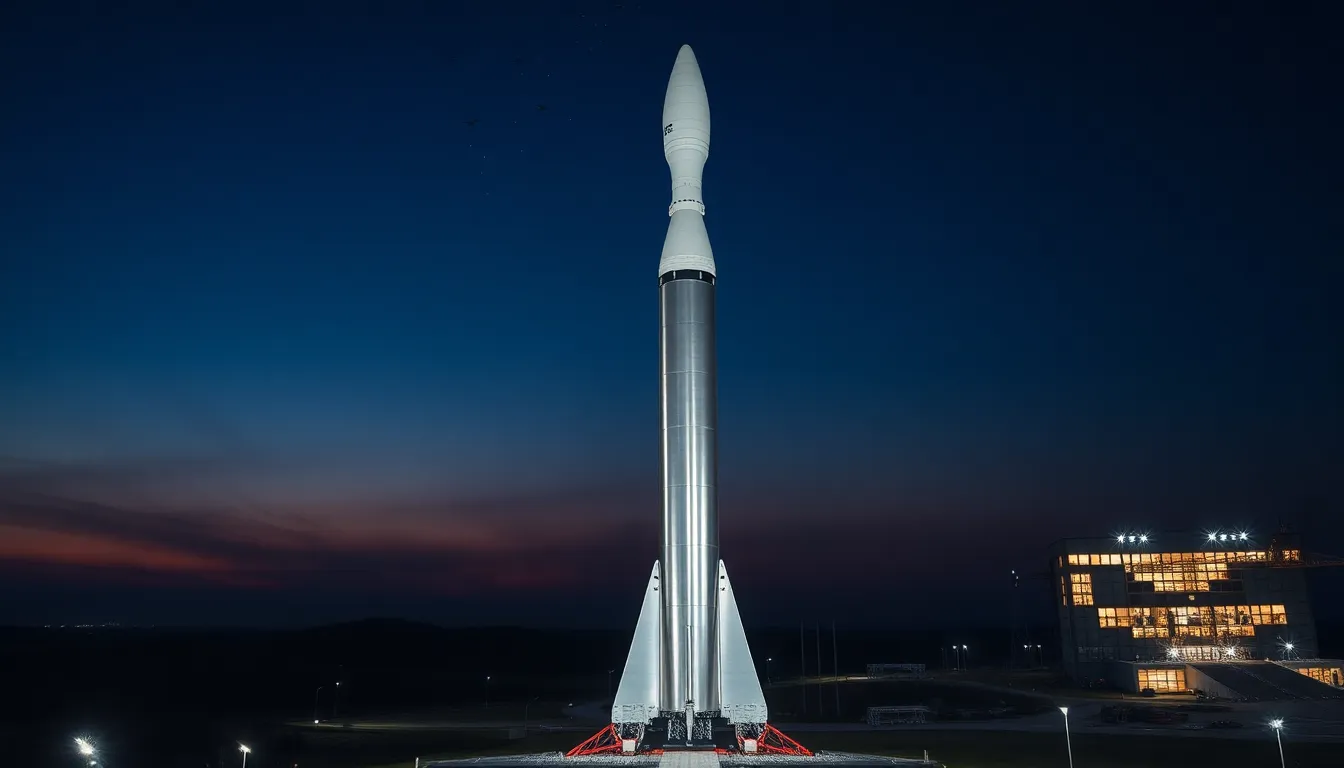
Reusable rocket systems represent one of the most important advances in top space technology today. Traditional rockets were single-use vehicles. They launched once, delivered their payload, and crashed into the ocean. This approach made every mission extremely expensive.
SpaceX changed that equation with the Falcon 9 rocket. The company has successfully landed and reflown boosters over 300 times since 2015. Each reuse saves tens of millions of dollars. Other organizations have taken notice. Blue Origin developed the New Shepard and New Glenn rockets with reusability in mind. Rocket Lab recovers its Electron boosters using parachutes and helicopter capture.
The economic impact is substantial. Launch costs have dropped from roughly $54,500 per kilogram to orbit in the Space Shuttle era to under $3,000 per kilogram on Falcon 9 today. This price reduction opens doors for smaller companies, universities, and developing nations to access space.
SpaceX’s Starship takes reusability further. The system aims to make both the booster and upper stage fully reusable. If successful, it could reduce costs by another order of magnitude. The company envisions launches costing just a few million dollars each.
Reusable rockets also enable faster launch cadences. SpaceX now launches more than 90 missions per year from the United States alone. This frequency was unthinkable a decade ago. The technology has fundamentally altered what’s possible in commercial and scientific space operations.
Advanced Satellite Networks
Advanced satellite networks form another pillar of top space technology shaping modern exploration and daily life. Mega-constellations like SpaceX’s Starlink have deployed over 6,000 satellites to provide global internet coverage. OneWeb and Amazon’s Project Kuiper are building competing networks.
These satellite systems operate in low Earth orbit, typically between 300 and 600 kilometers above the surface. This proximity reduces signal latency compared to traditional geostationary satellites positioned 36,000 kilometers away. Users experience internet speeds and response times comparable to ground-based connections.
Satellite technology has also advanced in Earth observation. Companies like Planet Labs operate hundreds of small imaging satellites. They photograph every point on Earth’s surface daily. This data supports agriculture, disaster response, climate monitoring, and urban planning.
The miniaturization of satellite components drives much of this progress. CubeSats, small standardized spacecraft, now perform tasks that once required room-sized equipment. A single CubeSat costs a fraction of traditional satellites yet delivers valuable scientific data.
Communication satellites support deep space missions too. NASA’s Deep Space Network maintains contact with spacecraft billions of kilometers from Earth. New optical communication systems promise faster data transmission rates. The Psyche mission is testing laser communications that could transmit data 10 to 100 times faster than radio.
These satellite networks create the infrastructure humanity needs for sustained space activity. They track debris, relay commands to rovers, and keep astronauts connected to mission control.
Space Telescopes and Deep Space Observation
Space telescopes stand among the most impactful examples of top space technology for scientific discovery. The James Webb Space Telescope, launched in December 2021, has already transformed our understanding of the early universe. It observes in infrared wavelengths, seeing through cosmic dust that blocks visible light.
Webb has captured images of galaxies formed just 300 million years after the Big Bang. It has detected water vapor in exoplanet atmospheres. Scientists use its data to study star formation, black holes, and the chemical composition of distant worlds.
The Hubble Space Telescope continues operating after more than 34 years in orbit. It has produced over 1.5 million observations and contributed to more than 20,000 peer-reviewed papers. Hubble and Webb work together, with Hubble observing in visible and ultraviolet light while Webb focuses on infrared.
Future missions will push boundaries further. The Nancy Grace Roman Space Telescope, scheduled for launch in 2027, will survey large portions of the sky to study dark energy and discover exoplanets. The European Space Agency’s PLATO mission will search for Earth-like worlds around Sun-like stars.
These instruments require remarkable precision. Webb’s primary mirror segments align to within a fraction of a wavelength of light. Its sunshield keeps instruments at temperatures of minus 233 degrees Celsius. Such engineering achievements enable discoveries impossible from Earth’s surface.
Deep space observation also includes missions to asteroids and outer planets. The DART mission demonstrated asteroid deflection. Europa Clipper will investigate Jupiter’s icy moon for signs of habitability.
Lunar and Martian Habitat Technology
Lunar and Martian habitat technology represents the next frontier in top space technology development. NASA’s Artemis program aims to establish a sustained human presence on the Moon by the end of the decade. This requires living spaces that protect astronauts from radiation, temperature extremes, and micrometeorite impacts.
Several approaches are under development. Inflatable habitats from companies like Sierra Space expand to provide larger volumes than rigid structures while fitting into smaller launch fairings. ICON, a construction technology company, is developing 3D-printed structures using lunar regolith as building material. This approach reduces the mass that must be launched from Earth.
Radiation shielding poses significant challenges. The Moon lacks Earth’s protective magnetic field and atmosphere. Martian conditions are similarly harsh. Proposed solutions include burying habitats under regolith, using water walls, or developing new shielding materials.
Life support systems must recycle air, water, and waste efficiently. The International Space Station already recovers about 90% of its water from humidity and urine. Future systems will need higher recovery rates and greater reliability for missions lasting months or years.
Mars presents additional complications. The planet sits an average of 225 million kilometers from Earth. Communication delays range from 4 to 24 minutes each way. Crews must handle emergencies independently. Supply missions take months to arrive.
NASA and private companies are testing habitat prototypes in analog environments. The HI-SEAS facility in Hawaii simulates Mars conditions. These experiments inform design decisions and help researchers understand the psychological challenges of isolation.


