
Table of Contents
ToggleThis space technology guide covers the essential systems driving modern exploration beyond Earth. Space technology includes rockets, satellites, rovers, and communication systems that allow humans to study and operate in space. These systems have changed how people live, work, and understand the universe.
From GPS navigation to weather forecasting, space technology affects daily life in ways most people don’t realize. This guide explains the key types of space technology, its real-world applications, current innovations, and the challenges facing the industry today.
Key Takeaways
- This space technology guide covers essential systems like rockets, satellites, rovers, and communication networks that power modern exploration.
- Reusable rockets from companies like SpaceX have reduced launch costs by up to 80%, making space more accessible.
- Over 10,000 active satellites currently orbit Earth, enabling GPS navigation, weather forecasting, and global communication.
- Space technology impacts daily life through medical advances, environmental monitoring, and connectivity in remote areas.
- The industry faces challenges including space debris, high costs, regulatory hurdles, and workforce shortages.
- Upcoming missions like NASA’s Artemis program and SpaceX’s Starship aim to return humans to the Moon and eventually reach Mars.
Key Types of Space Technology
Space technology spans several categories. Each type serves a specific purpose in exploration, research, or communication.
Launch Systems
Rockets remain the primary method for reaching space. Traditional chemical rockets use liquid or solid fuel to generate thrust. Companies like SpaceX have developed reusable rockets, reducing launch costs by up to 80%. The Falcon 9, for example, has completed over 200 successful missions as of 2024.
Satellites
Satellites orbit Earth and perform various functions. Communication satellites relay phone calls, internet data, and television signals. Earth observation satellites monitor weather patterns, track environmental changes, and support agriculture. GPS satellites provide location data for navigation systems worldwide.
Over 10,000 active satellites currently orbit Earth. Starlink alone operates more than 5,000 satellites for internet coverage.
Spacecraft and Probes
Spacecraft carry humans or instruments to destinations in space. The International Space Station (ISS) has hosted astronauts continuously since 2000. Probes like the James Webb Space Telescope capture images from billions of light-years away. Rovers such as Perseverance explore planetary surfaces and collect samples.
Ground Control Systems
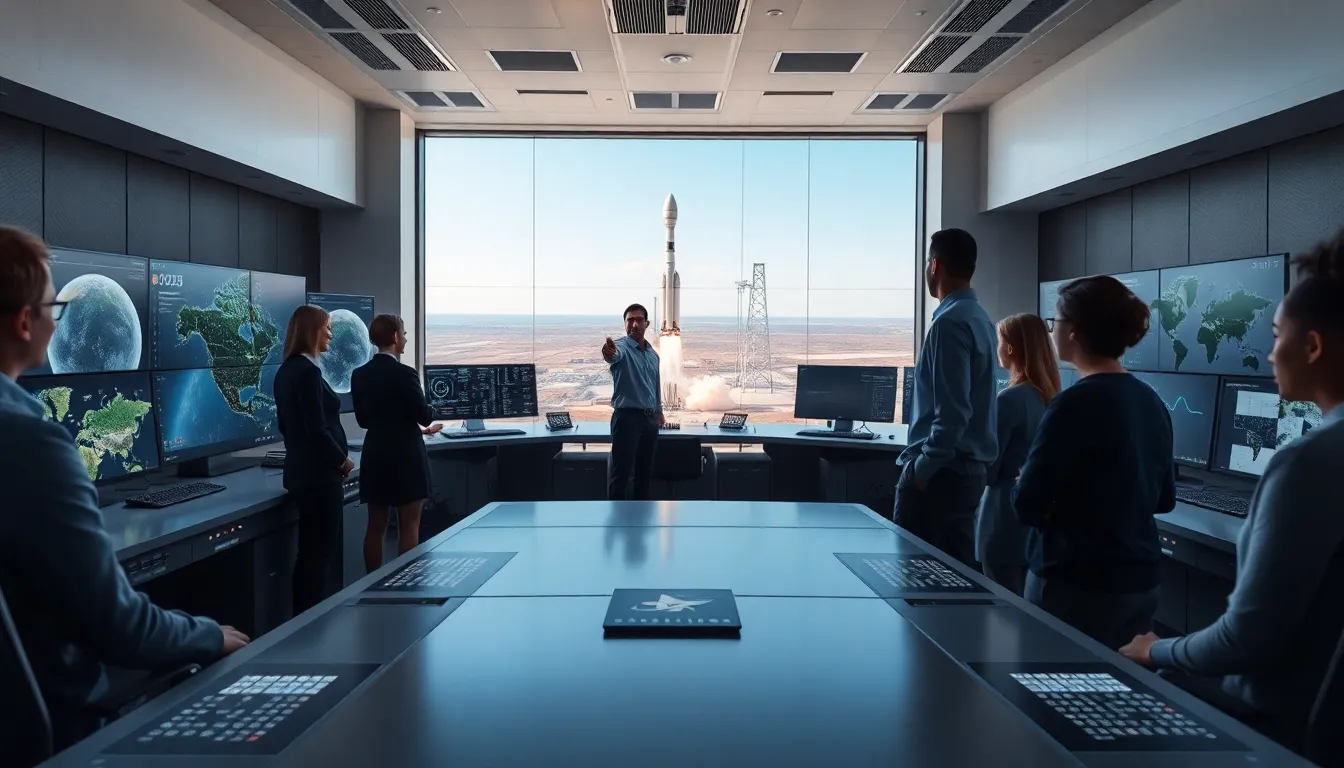
Mission control centers on Earth manage space operations. These facilities track spacecraft, send commands, and receive data. NASA’s Deep Space Network maintains communication with missions across the solar system.
How Space Technology Impacts Everyday Life
Space technology touches daily life in surprising ways. Many modern conveniences rely on systems originally developed for space programs.
Communication and Connectivity
Satellites enable global communication. Phone calls, video streaming, and internet access depend on orbital infrastructure. Remote areas without traditional internet can now connect through satellite broadband services.
Navigation and Transportation
GPS technology guides cars, planes, and ships. Ride-sharing apps, delivery services, and emergency responders use satellite positioning. Farmers use GPS to optimize planting patterns and increase crop yields.
Weather Forecasting
Weather satellites track storms, hurricanes, and climate patterns. Meteorologists use this data to issue warnings and save lives. Accurate forecasts help airlines avoid turbulence and plan efficient routes.
Medical Advances
Space research has produced medical breakthroughs. Infrared thermometers, portable ultrasound devices, and water purification systems originated from space programs. Experiments on the ISS help scientists study diseases and develop new treatments in microgravity conditions.
Environmental Monitoring
Satellites track deforestation, ocean temperatures, and pollution levels. This data supports climate research and helps governments enforce environmental regulations. Scientists use space-based observations to measure ice sheet changes and rising sea levels.
Current Trends and Innovations in Space Tech
The space technology industry is changing rapidly. Private companies now compete alongside government agencies, and new technologies are opening fresh possibilities.
Reusable Rockets
Reusable launch vehicles have transformed the economics of space access. SpaceX’s Starship aims to carry over 100 tons to orbit. Blue Origin and Rocket Lab are also developing reusable systems. Lower costs mean more frequent launches and faster innovation cycles.
Small Satellites and CubeSats
Miniaturized satellites perform tasks that once required large, expensive platforms. CubeSats, satellites roughly the size of a shoebox, cost a fraction of traditional satellites. Universities and startups now launch their own space missions.
Space Tourism
Commercial space travel has become a reality. Companies offer suborbital flights for paying customers. Virgin Galactic and Blue Origin have carried private passengers to the edge of space. Orbital tourism packages are in development, with Space Exploration Technologies planning civilian missions.
Lunar and Mars Missions
NASA’s Artemis program aims to return humans to the Moon by the mid-2020s. SpaceX is developing Starship for eventual Mars colonization. China and India have also launched successful lunar missions, expanding international participation in deep space exploration.
In-Space Manufacturing
Microgravity enables manufacturing processes impossible on Earth. Companies are experimenting with 3D printing in orbit. Producing fiber optics, pharmaceuticals, and semiconductors in space could create new industries.
Challenges Facing the Space Technology Industry
Even though rapid progress, the space technology sector faces significant obstacles.
Space Debris
Orbital debris threatens active satellites and crewed missions. Thousands of defunct satellites and rocket fragments circle Earth at high speeds. A collision could trigger a chain reaction, making certain orbits unusable. Agencies are developing debris removal technologies, but no large-scale solution exists yet.
Cost and Funding
Space missions require massive investment. While costs have dropped, developing new spacecraft still demands billions of dollars. Government budgets fluctuate with political priorities. Private companies must balance innovation with profitability.
Regulatory Hurdles
International space law hasn’t kept pace with commercial activity. Questions about property rights on celestial bodies remain unresolved. Spectrum allocation for satellite communications creates conflicts between operators. Countries are working to update frameworks, but progress is slow.
Technical Limitations
Current propulsion systems limit how fast and far humans can travel. A trip to Mars takes six to nine months with existing technology. Radiation exposure during long missions poses health risks to astronauts. Scientists are researching nuclear propulsion and better shielding materials.
Workforce Shortages
The industry needs engineers, scientists, and technicians. Competition for skilled workers is intense. Training programs struggle to produce enough qualified candidates to meet growing demand.


