
Table of Contents
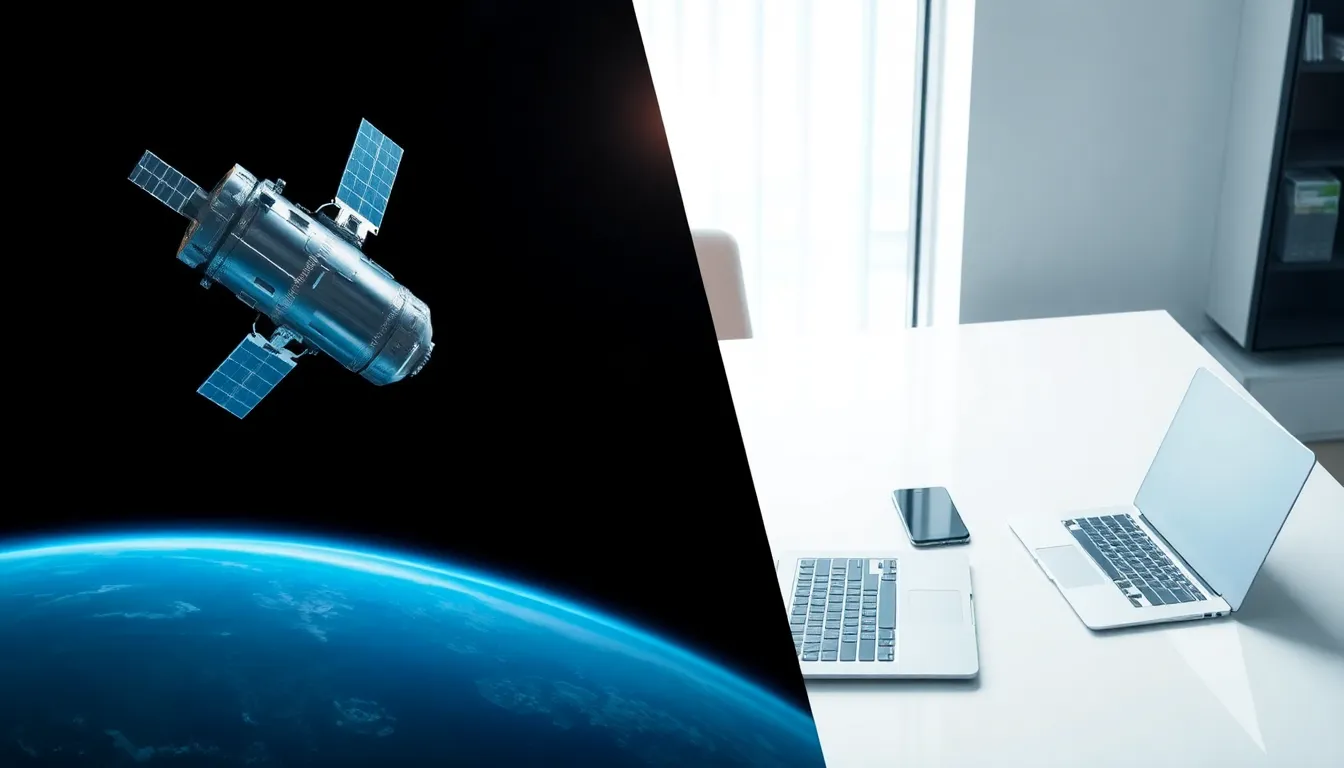
ToggleSpace technology vs. traditional technology, what actually separates the two? The distinction matters more than most people realize. Space technology operates in extreme environments where failure isn’t an option. Traditional technology powers everyday life on Earth. Both categories drive innovation, but they follow different rules, serve different purposes, and face vastly different challenges. This article breaks down the key differences between space technology and traditional technology, covering their definitions, design principles, and real-world applications.
Key Takeaways
- Space technology vs. traditional technology differs fundamentally in reliability requirements, with space systems demanding near-perfect 99.9% success rates compared to acceptable 1-5% failure rates in consumer products.
- Space technology must survive extreme conditions including temperatures from -270°C to 120°C, radiation, and vacuum—environments that would destroy standard equipment.
- Traditional technology prioritizes cost efficiency and mass production, while space technology focuses on weight optimization since launching one kilogram into orbit costs thousands of dollars.
- Space innovations like memory foam, water purification systems, and medical imaging techniques have transferred to everyday traditional technology applications.
- The boundary between space technology and traditional technology is blurring as private companies adopt commercial components to reduce satellite launch costs significantly.
Understanding Space Technology
Space technology refers to equipment, systems, and processes designed for use beyond Earth’s atmosphere. This includes satellites, rockets, space probes, and life support systems. Engineers build space technology to survive conditions that would destroy standard equipment.
The defining characteristic of space technology is its ability to function in hostile environments. Spacecraft face extreme temperatures ranging from -270°C to over 120°C. They must withstand intense radiation, vacuum conditions, and micrometeorite impacts. Every component requires extensive testing before launch.
Reliability stands as the top priority in space technology development. A single malfunction can end a billion-dollar mission. Engineers use redundant systems, meaning backup components activate automatically if primary systems fail. The Mars rovers, for example, carry duplicate computers and multiple communication pathways.
Space technology also demands extreme weight efficiency. Launching one kilogram into orbit costs thousands of dollars. This constraint forces engineers to minimize mass while maintaining strength. Materials like titanium, carbon fiber composites, and specialized alloys appear frequently in spacecraft construction.
Power generation presents another unique challenge. Solar panels and nuclear batteries provide energy where traditional power grids don’t exist. The Voyager probes, launched in 1977, still operate on radioisotope thermoelectric generators nearly 50 years later.
How Traditional Technology Differs
Traditional technology encompasses the devices and systems people use daily on Earth. Smartphones, automobiles, industrial machinery, and home appliances fall into this category. These technologies operate within Earth’s protective atmosphere and stable environment.
Cost efficiency drives traditional technology development. Manufacturers compete on price, producing millions of identical units. A smartphone manufacturer might build 200 million devices annually. This scale reduces per-unit costs dramatically.
Traditional technology benefits from easy maintenance and repair. When a car breaks down, mechanics can access parts and fix problems. Space technology offers no such luxury, repairs in orbit remain rare and extraordinarily expensive.
Design cycles move faster in traditional technology sectors. Consumer electronics companies release new products annually. Space missions, by contrast, can take decades from concept to launch. The James Webb Space Telescope took 25 years to develop.
Traditional technology also tolerates higher failure rates. If one laptop in a batch malfunctions, the company replaces it. This acceptable failure rate allows for faster innovation and lower production costs. Space technology cannot afford this approach.
Environmental conditions remain predictable for traditional technology. Engineers design for temperatures between -40°C and 60°C, normal atmospheric pressure, and standard gravity. These stable parameters simplify the engineering process considerably.
Core Differences Between Space and Traditional Technology
The space technology vs. traditional technology comparison reveals several fundamental differences in how engineers approach design challenges.
Reliability Requirements
Space technology demands near-perfect reliability. NASA aims for 99.9% mission success rates. Traditional technology accepts failure rates of 1-5% as normal business practice. This gap in reliability standards affects every design decision.
Testing Protocols
Space hardware undergoes years of testing before deployment. Engineers simulate vacuum, radiation, vibration, and thermal cycling. Traditional technology relies on shorter quality assurance processes. A new phone model might undergo months of testing, not years.
Material Selection
Space technology uses specialized materials that can cost 100 times more than standard alternatives. Aerospace-grade aluminum, radiation-hardened electronics, and exotic alloys appear throughout spacecraft. Traditional technology uses commodity materials available from multiple suppliers.
Weight Constraints
Every gram matters in space technology. Engineers spend months optimizing weight distribution. Traditional technology faces fewer weight restrictions. A heavier laptop isn’t ideal, but it won’t bankrupt a project.
Power Systems
Space technology relies on solar arrays, fuel cells, or nuclear power sources. Traditional technology connects to electrical grids or uses rechargeable batteries. The power challenge fundamentally shapes space technology design.
Maintenance Access
Traditional technology allows regular maintenance, upgrades, and repairs. Space technology must function autonomously for years or decades. The Hubble Space Telescope received servicing missions, but most spacecraft never receive human attention after launch.
Real-World Applications and Impact
Space technology vs. traditional technology creates interesting crossover effects. Innovations from space programs frequently transfer to everyday products.
Memory foam originated from NASA research in the 1960s. Engineers developed the material to improve aircraft seat cushioning. Today, memory foam appears in mattresses, shoes, and medical equipment worldwide.
Water purification systems used on the International Space Station now clean drinking water in remote communities. The technology removes contaminants without requiring electricity or replacement filters.
Satellite technology enables GPS navigation, weather forecasting, and global communications. These space-based systems have become essential infrastructure for traditional technology applications. Smartphones depend on satellites for location services.
Medical imaging equipment borrowed techniques from space telescope development. The same principles that help astronomers see distant galaxies now help doctors detect tumors earlier.
Traditional technology also influences space programs. Commercial off-the-shelf components increasingly appear in satellites. SpaceX uses modified automotive-grade computers in some applications. This approach reduces costs while maintaining acceptable reliability.
The boundary between space technology and traditional technology continues to blur. Private companies now launch satellites for a fraction of historical costs. This shift brings space technology closer to traditional manufacturing practices.


